Saturday, October 14, 2023

निजी क्षेत्रलाई विद्युत व्यापार खुल्ला गर्नेदेखि वैदेशिक लगानी भित्र्याउन सहजिकरण गर्ने प्रतिबद्धता जनाउँदै सकियो ऊर्जा सम्मेलन

 https://nepalpurbadhar.com/18525/

  • नेपाल पूर्वाधार नेपाल पूर्वाधार
  •  
  •  बैशाख ६, २०८०
  •  
  • पावर समिट २०२३
  • काठमाडौं । नेपालको निजी क्षेत्रलाई आन्तरिक तथा अन्तरदेशीय विद्युत व्यापारका लागि नीतिगत व्यवस्था गरी ढोखा खुल्ला गर्नेदेखि ठूला जलविद्युत आयोजनामा प्रत्यक्ष वैदेशिक लगानी भित्र्याउन सहजिकरण गर्ने प्रतिबद्धता जनाउँदै ऊर्जा सम्मेलन २०२३ सम्पन्न भएको छ । स्वतन्त्र ऊर्जा उत्पादकहरूको संस्था, नेपाल (इपान) को आयोजनामा मंगलबारबाट राजधानीको होटल हायातमा सुरु भएको २ दिने सम्मेलन बुधबार सकिएको हो ।

    समापन समारोहलाई सम्बोधन गर्दै ऊर्जा, जलस्रोत तथा सिँचाइ मन्त्री शक्ति बस्नेतले सम्मेलनका उपलब्धीलाई सरकारले आत्मसाथ गर्दै अगाडि बढ्ने बताए । उनले सम्मेलनमा विभिन्न सत्रमा भएका छलफल तथा बहसबाट ऊर्जा क्षेत्रको विकासमा थप योगदान पुग्ने बताए ।

    ‘सम्मेलनमा विद्युत उत्पादन, प्रसारण, वितरण तथा व्यापार तथा नीतिगत व्यवस्थाका सम्बन्धमा धेरै छलफलहरू भएका छन्,’ उनले भने, ‘मन्त्रालय मातहतका निकायबाट भएका प्रस्तुतिकरणबाट पनि सरकारको नीति र योजनाका बारेमा जानकारी मिलेको छ ।’

    उनले विद्युत व्यापारमा निजी क्षेत्रलाई ल्याउने उपयुक्त समय भइसकेको बताउँदै बस्नेतले सरकारले नीतिगत व्यवस्था गरेर जाने बताए । उनले आन्तरिक खपत वृद्धि तथा अन्तरदेशीय बजारमा निर्यात गर्नका लागि उत्पादन बढाउन ऊर्जा क्षेत्रमा ठूलो लगानी आवश्यक रहेको उनको भनाइ छ ।

    विद्युत नियमन आयोगका अध्यक्ष डिल्लीबहादुर सिंहले आयोगले मुलुकको ऊर्जा क्षेत्रको विकासका लागि सहजिकरण गरेर सहयोग गरिरहेको बताए । उनले विगतमा विविध कारणले रुग्ण अवस्थामा पुगेका जलविद्युतगृहलाई पुनर्कर्जाको सुविधा उपलब्ध गराउन भूमिका खेलेकाले अहिले ती जलविद्युतगृहको वित्तीय अवस्थामा सुधार भएको बताए ।

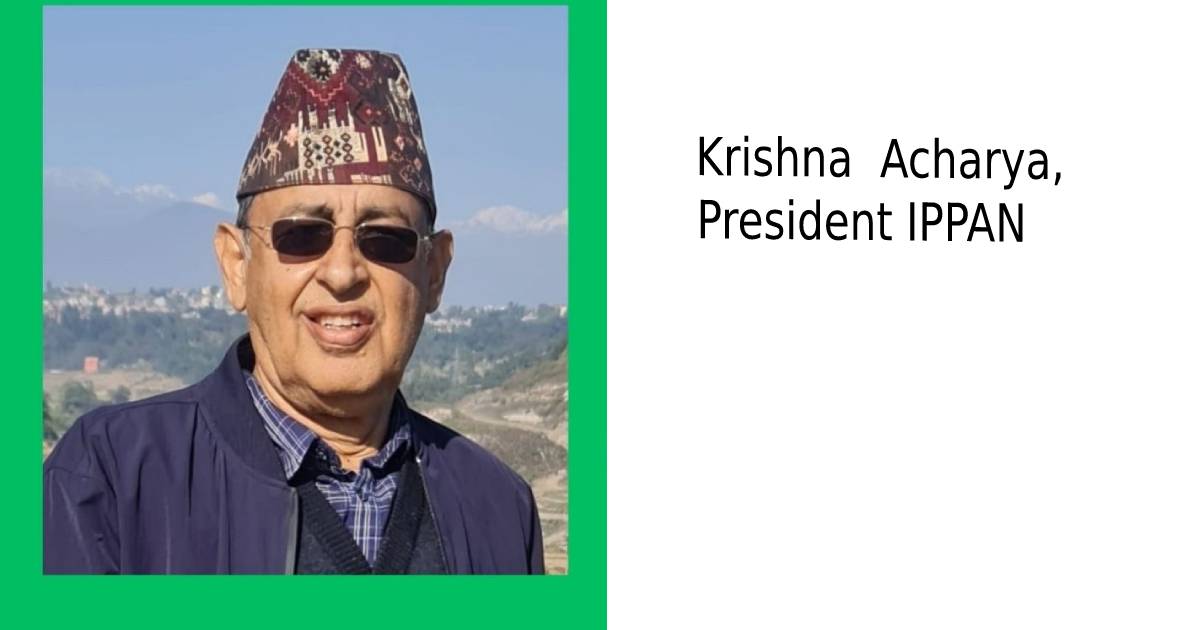
    इपान अध्यक्ष कृष्ण आचार्यले २ दिने सम्मेलनमा प्रधानमन्त्री, अर्थमन्त्री, ऊर्जा मन्त्रीदेखि हाल संसदको प्रतिनिधित्व गर्ने पूर्व ऊर्जा मन्त्रीसम्मले सहभागिता जनाएर निजी क्षेत्रका कुरा सुनिदिएको बताए । उनले नेपाली निजी क्षेत्र अब उत्पादनबाट विद्युत व्यापारको क्षेत्रमा रुपान्तरण हुने चरणमा पुगेको बताए ।

    ‘ऊर्जा सम्मेलनमा नेपालको विद्युत खरिद गरेर भारत तथा मंगलादेशको बजारसम्म पुर्याउने धेरै विदेशी कम्पनीहरू आएका छन्,’ उनले भने, ‘सरकारले पनि निजी क्षेत्रलाई विद्युत व्यापारका लागि अनुमति दिने कुरामा गम्भिरता देखाएको छ ।’ उनले नीतिको अभावमा निजी क्षेत्र विद्युत व्यापारमा जान नसकेको बताउँदै आचार्यले विद्युत विधेयक आउन ढिला हुने हुँदा मन्त्रिपरिषदबाट निर्णय गराएर वा अध्यादेशमार्फत ऐन ल्याई बाटो खोलिदिनुपर्नेमा जोड दिए ।

    ‘भारतबाट तत्कालै २ हजार मेगावाट विद्युत खरिद गर्ने प्रतिबद्धता आइसकेको छ । अहिले विद्युत खरिदकर्ता धमाधम आइरहँदा नीति नभएकै कारण नेपाल ढिलो भइसकेको छ । संसदबाट पारित गरेर विद्युत ऐन ल्याउन समय लाग्ने हुँदा मन्त्रिपरिषदबाट निर्णय गराएर वा अध्यादेश मार्फत ल्याउने विकल्पमा जानुपर्छ,’ उनले भने ।

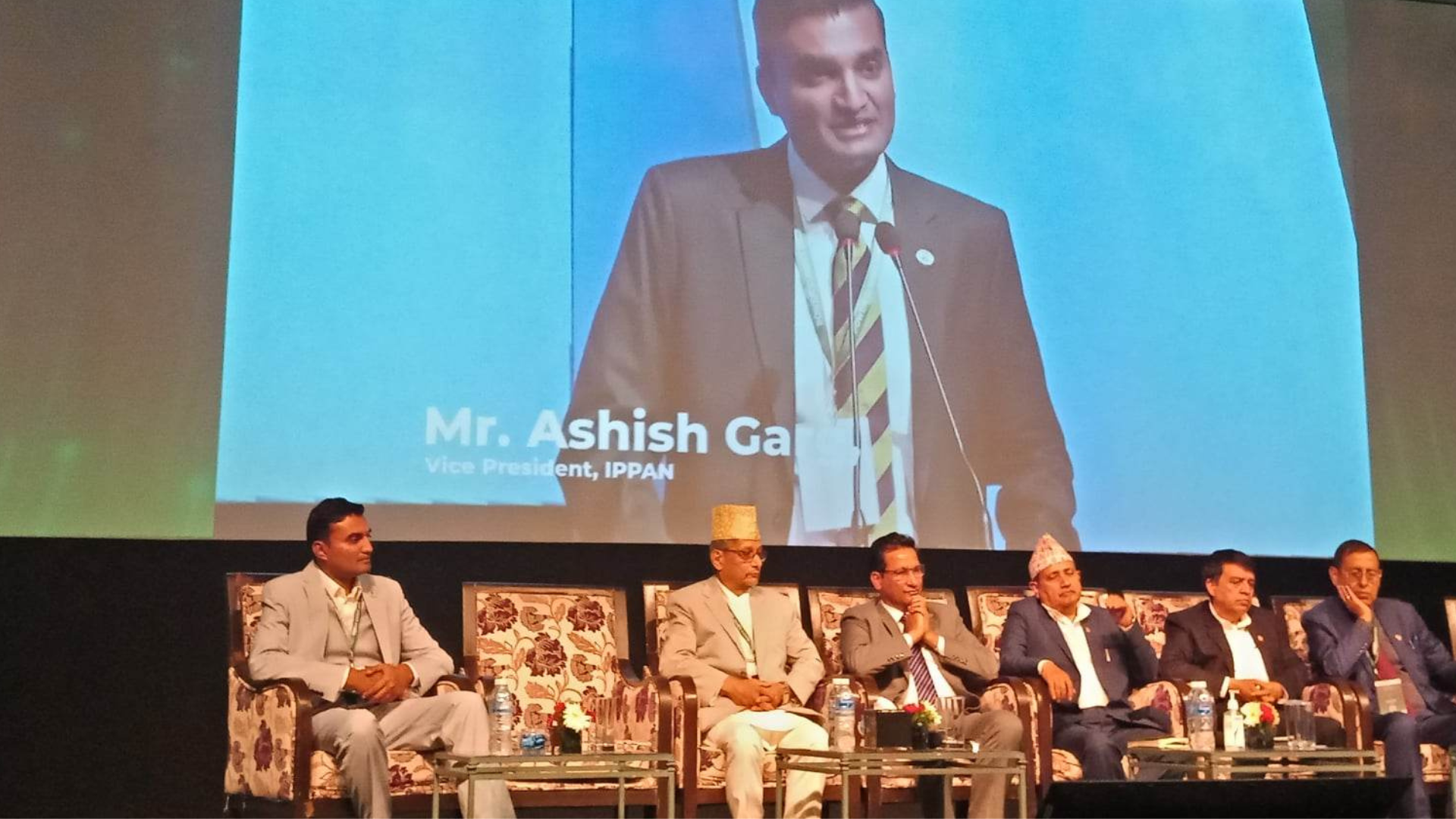
    इपान उपाध्यक्ष आशिष गर्गले २ दिने सम्मलनमा उपलब्धीमुलक छलफल भएको बताए । उनले सम्मेलनमा नेपालको विद्युत सोझै खरिद गर्ने प्रतिबद्धता लिएर धेरै कम्पनीहरू आएकाले सरकारलाई पनि नीतिगत व्यवस्था गर्न प्रोत्साहन मिलेको बताए ।

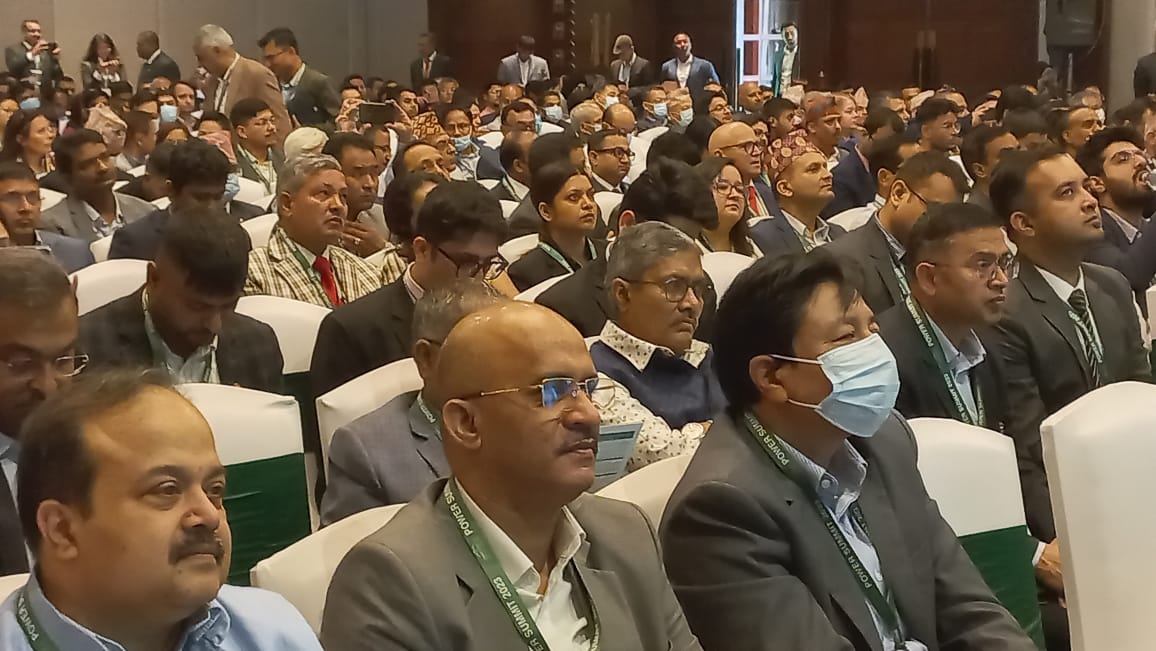
    ‘सम्मेलनमा १९ बढी देशका साढे ८ सय प्रतिनिधिले सहभागिता जनाएका छन्, १२५ जना बढी वक्ताहरूले बोलेका छन्,’ उनले भने, ‘यो सहभागिता उत्साहजनक हो । २४ सय मेगावाटका आयोजना प्रदर्शनीमा राखियो । सबै हिसाबले सम्मेलन सफल भएको छ ।’

    उनले भारतको भिदान्त कम्पनीले नेपालबाट २ हजार मेगावाट विद्युत खरिद गर्न आशयपत्र पेश गरेको पनि उनले बताए । १२ हजार मेगावाट विद्युत उत्पादन गरिरहेको भिदान्तले कार्बन उत्सर्जन कम गर्न निर्धारित लक्ष्य पूरा गर्न नेपालको स्वच्छ ऊर्जा खरिद गर्ने प्रतिबता जाएको पनि उनले बताए ।

    एनएनपिसीका अध्यक्ष एवं कार्यकारी निर्देशक आरके विस्नोईले नेपाल जलविद्युत उत्पादनका लागि उर्भर भूमि भएकाले आफुहरूले पनि ३ वटा जलविद्युत आयोजना निर्माण गर्न लागेको बताए । उनले यी आयोजनामा आफैँ बजार व्यवस्थापन गर्ने गरी निर्माण गरिने बताए ।

    भारत पनि स्वच्छ ऊर्जा उत्पादनमा लागेको बताउँदै विस्नोईले सौर्य र वायु ऊर्जालाई प्रसारण ग्रिडमा स्थिर राख्न जलविद्युतको भूमिका महत्त्वपूर्ण हुने हुँदा नेपाल त्यसका लागि उत्कृष्ट गन्तव्य भएको बताए ।

    नेपालसँग २ हजार मेगावाट विद्युत खरिद गर्न भारतीय कम्पनीकाे आसयपत्र

     https://nepalpurbadhar.com/18508/

  • नेपाल पूर्वाधार नेपाल पूर्वाधार
  •  
  •  बैशाख ६, २०८०
  •  
  • ऊर्जा
  • काठमाडाैं । भारतकाे भेदान्त लिमिटेडले नेपालसँग २ हजार मेगावाट विद्युत खरिद गर्न आसयपत्र दिएकाे छ ।

    काठमाडाैंमा जारी ऊर्जा सम्मेलन २०२३ मा कम्पनीकाे तर्फबाट प्रमुख कार्यकारी अधिकृत विभव अग्रवालले नेपेक्सलाई विद्युत खरिद गर्ने आसयपत्र दिएकाे हाे। नेपेक्स स्वतन्त्र ऊर्जा उत्पादकहरुहरुले स्थापना गरेको निजी  विद्युत व्यापार कम्पनी हो ।

    भेदान्तले डिकार्बोनाइजेशनको नीति अनुरुप नेपालबाट दीर्घकालिन रुपमा विद्युत खरिद गर्न आशयपत्र बुझाएको नेपेक्सका प्रमुख कार्यकारी अधिकृत आशिष गर्गले बताए ।

    डिकार्बोनाइजेशनको लक्ष्य भेट्टाउन नेपालको विद्युत खरिद गर्ने इच्छा देखाएको भेदान्तका प्रमुख कार्यकारी अधिकृत अग्रवालले सम्मेलनमा भर्चुअल उपस्थितिमार्फत बताए ।

    यसअघि सम्मेलनको पहिलो मंगलबार भारतको अर्को निजी कम्पनी मणिकरण पावरले २ सय मेगावाट विद्युतको लागि समझदारी गरिसकेको छ । यससँगै नेपालबाट कुल २ हजार २ सय मेगावाट विद्युत खरिदको लागि भारतीय कम्पनी इच्छुक देखिएका छन् ।

    ऊर्जा सम्मेलनमा ४ महत्त्वपूर्ण समझदारी तथा सम्झौता,२ सय मेगावाट विद्युत सोझै भारतीय निजी कम्पनीलाई बेच्ने तयारी

     https://nepalpurbadhar.com/18473/

  • नेपाल पूर्वाधार नेपाल पूर्वाधार
  •  
  •  बैशाख ५, २०८०
  •  
  • पावर समिट २०२३
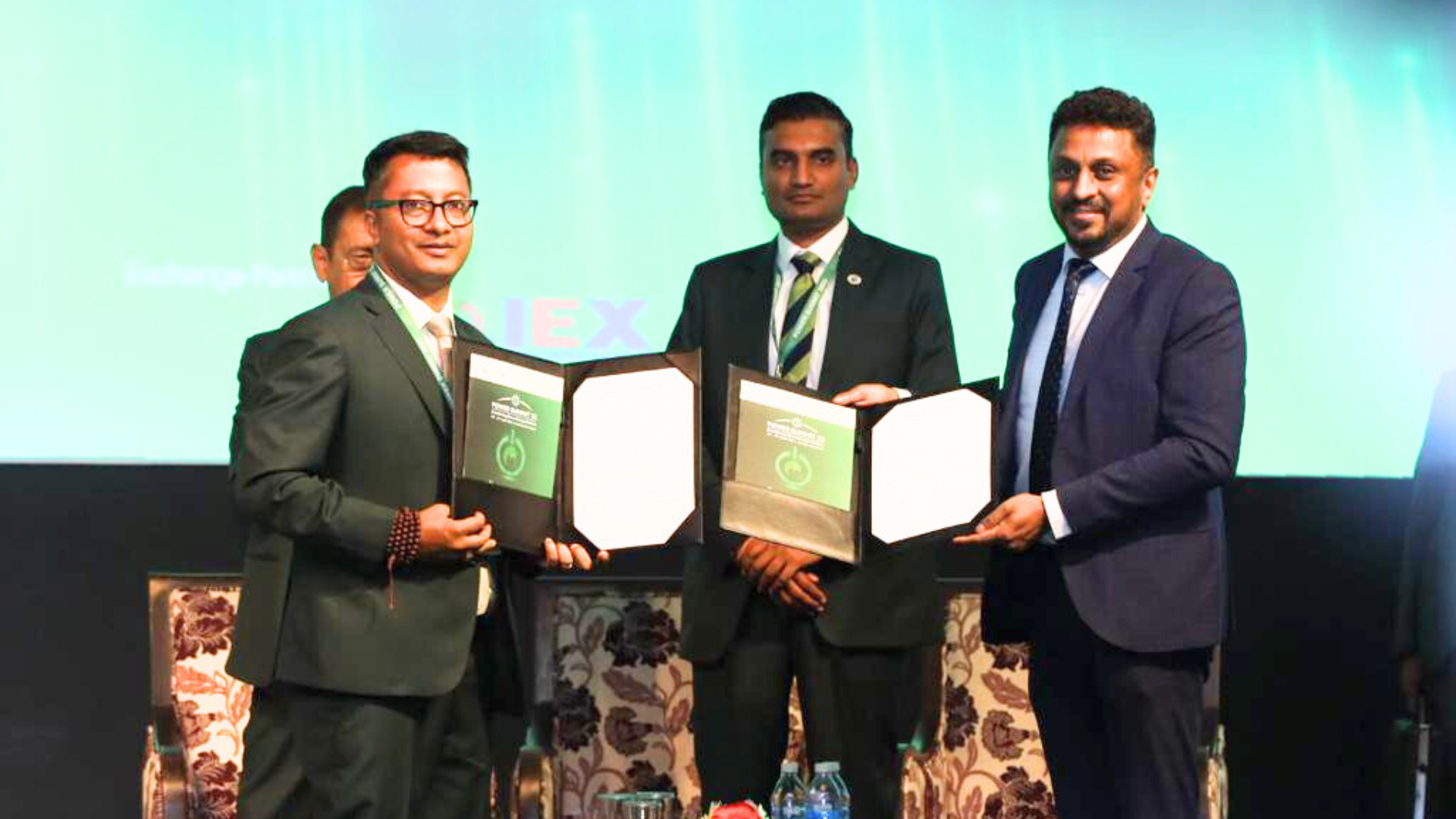
  • काठमाडौं । काठमाडौंमा मंगलबारबाट सुरु भएको ऊर्जा सम्मेलन २०२३ मा नेपाल तथा भारतका निजी ऊर्जा कम्पनीहरूबीच विद्युत–खरिद बिक्रीसम्बन्धी महत्त्वपूर्ण समझदारी एवं समझौताहरू भएका छन् । होटल हायातमा जारी सम्मेलनमा प्रधानमन्त्री पुष्पकमल दाहालको उपस्थितिमा अन्तरदेशी विद्युत व्यापार गर्ने उद्देश्यले स्थापना भएको नेपाल पावर एक्सचेञ्ज कम्पनी र भारतको स्टिलमिण्ट इण्डिया कम्पनीबीच सम्झौता भएको छ ।

    नेपाल पावर एक्सचेञ्ज कम्पनीको तर्फबाट स्वतन्त्र ऊर्जा उत्पादकहरूको संस्था, नेपाल (इपान) का अध्यक्ष कृष्ण आचार्य र स्टिलमिण्टको इण्डियाको तर्फबाट महाप्रबन्धक क्षितिज पाण्डेले हस्ताक्षर गरे । नेपाल पावर एक्सचेञ्ज इपानको सहायक कम्पनी हो ।
    सम्झौता अनुसार नेपालमा मिण्ट पावर इण्डेक्स सुरु गरिनेछ । यसले विद्युत महसुल, विद्युत माग र आपूर्ति व्यवस्थापन लगायतका विषयमा जानकारी दिने मञ्चको रूपमा काम गर्नेछ । स्टिल इण्डिया भारतमा स्टिल, कोइला र ऊर्जा उद्योगको बारेमा उपभोक्तालाई जानकारी दिने मूख्य कम्पनीमध्येमा पर्छ ।

    त्यस्तै, सम्मेलनमा भारतको मणिकरण पावर कम्पनी र नेपालको बिजबेल इनर्जी कम्पनीबिच विद्युत खरिदसम्बन्धी समझदारी पत्रमा हस्ताक्षर भएको छ । समझदारीअनुसार बिजबेल इनर्जीले हुम्लामा निर्माण गरिरहेको १०३. ५ मेगावाट क्षमताको चुवा खोला आयोजनाबाट उत्पादन हुने विद्युत भारतीय कम्पनी मणिकरणले खरिद गर्नेछ ।

    समझदारी पत्रमा बिजबेल इनर्जीको तर्फबाट प्रबन्ध निर्देशक सुशिल पोखरेल र नेपाल पावर एक्सचेञ्ज कम्पनीको तर्फबाट प्रबन्ध निर्देशक आशिष गर्ग तथा मणिकरणको तर्फबाट कम्पनीका निर्देशक प्रविण अब्राहमले हस्ताक्षर गरे । समझदारीअनुसार नेपाल पावर एक्सचेञ्ज कम्पनीले विद्युत खरिद कम्पनी मणिकरण र विक्री गर्ने कम्पनी बिजबेलबीच खरिदविक्रीको लागि मध्यस्थताको रुपमा काम गर्नेछ । सम्मेलनमा मणिकरण र कसुवा खोला जलविद्युत् आयोजनाबीच पनि समझदारीपत्रमा हस्ताक्षर गरेका छन् ।

    संखुवासभामा रहेको ४५ मेगावाट क्षमताको कसुवा खोला जलविद्युत् आयोजनाले उत्पादन गर्ने थप विद्युत मणिकरणलाई बिक्री गर्नेछ । कसुवा खोलाले यसअघि नै नेपाल विद्युत् प्राधिकरणसँग ४५ मेगावाट विद्युत खरिद सम्झैता गरिसकेको छ । तर, सरकारले नीतिगत रुपमा क्यू घटाएर २५ सम्म ल्याउन सक्ने र विद्युत उत्पादन क्षमता क्षमता बढाउन सक्ने व्यवस्था गरेपछि आयोजनाले क्षमता वृद्धि गरेर ८५ मेगावाटसम्म उत्पादन गर्ने योजना बनाएको छ ।

    यसअनुसार विद्युत् प्राधिकरणसँग भएको सम्झौताभन्दा बढी परिमाणको विद्युत मणिकरणलाई विक्री गरिनेछ । मणिकरणले कसुवाखोला जलविद्युत् आयोजनाबाट प्राप्त हुने विद्युतलाई दीर्घकालिन रुपमा भारतमा खपत गर्नको लागि भुमिका खेल्नेछ । त्यस्तै, यो कामको लागि नेपाल पावर एक्सचेञ्ज कम्पनीले खरिदकर्ता र बिक्रीकर्ताबीच मध्यस्थताको रुपमा भुमिका खेल्नेछ ।

    यसैगरी, सम्मेलनमा फिफ्टीहर्ज प्राइभेट र ग्रीण रिसोर्सेज कम्पनीबीच पनि सम्झौता भएको छ । यी दुई कम्पनीले संयुक्त उपक्रम (ज्वाइण्ट भेञ्चर) को रुपमा हरित ऊर्जाका विभिन्न क्षेत्र आउने समस्या समाधानका लागि काम गर्नेछन् ।

    विशेषगरी संयुक्त उपक्रमको कम्पनीले सौर्य र जलविद्युत आयोजनाको क्षमता र उत्पाद प्रक्षेपण, आयोजनाको क्षमता वृद्धि र आयोजनाको सम्पतिलगायतका विषयलाई व्यवस्थापन गर्ने काम गर्नेछन् । सम्झौतामा फिफ्टीहर्जको तर्फबाट कम्पनीका अध्यक्ष विनित कुमार र ग्रीण सिसोर्सेजको तर्फबाट आशिष गर्गले हस्ताक्षर गरे ।

    ऊर्जा सम्मेलन २०२३ काठमाडौंमा सुरु, आन्तरिक खपत र क्षेत्रिय विद्युत व्यापारमा जोड दिने प्रधानमन्त्रीको भनाई

     https://nepalpurbadhar.com/18462/

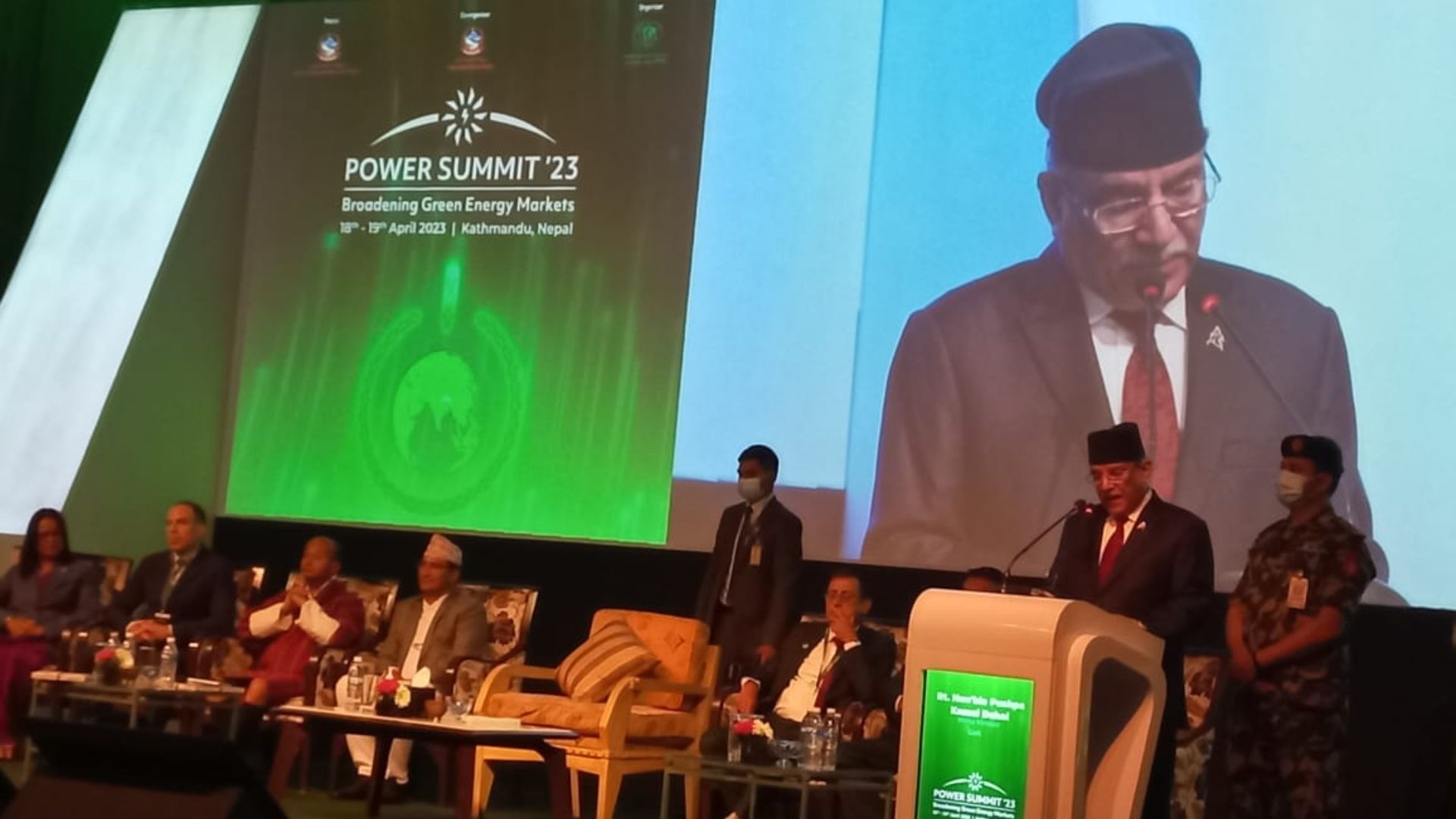
    काठमाडौं । ऊर्जा सम्मेलन (पावर समिट) २०२३ मंगलबारदेखि काठमाडौमा शुरु भएको छ । प्रधानमन्त्री पुष्पकमल दाहालले दुई दिनसम्म चल्ने सम्मेलनको उद्घाटन गरे । उद्घाटन सत्रलाई सम्बोधन गर्दै प्रधानमन्त्री दाहालले सन् २०२५ देखि हिउँदमा पनि विद्युत आयात गर्न नपर्ने गरी नेपालमा विद्युत उत्पादन उत्पादन भइरहेको बताए ।

    उत्पादन भएको विद्युत् आन्तरिक खपतमा अधिकतम उपयोग गर्ने र बढी भएको विद्युत् निर्यात गर्ने गरी प्राथमिकता तोकेर काम गरिएको उनको भनाइ छ । ‘आन्तरिक खपत वृद्धि गर्नको लागि कृषि, भान्सा, उद्योग र यातायात क्षेत्रमा विद्युत खपत वृद्धि गर्ने विषयलाई प्राथमिकता दिइरहेको छौं’ उनले भने ।

    सम्मेलनमा प्रधानमन्त्रीले अन्तरदेशीय र सार्क क्षेत्रिय रुपमा निर्यात गर्ने विषयलाई पनि समानान्तर रुपमा अघि बढाएको उल्लेख गरे । सरकार निजी क्षेत्रसँग मिलेर ऊर्जा क्षेत्रको विकासमा अघि बढिरहेको र त्यसलाई निरन्तरता दिने सम्बोधनको क्रममा बताए । प्रधानमन्त्री दाहालले २०४५ सम्ममा कार्वन उत्सजन शुन्य बनाउने विषयलद्धता गरिसकेको ऊर्जा क्षेत्रको विकास र उपायोगबाट त्यो लक्ष्य हासिल हुने विश्वास व्यक्त गरे ।

    ऊर्जा मन्त्री शक्ति बहादुर बस्नेतले जलविद्युत् आयोजनामा लगानी गर्न आउने सबैलाई ढोका खुल्ला रहेको बताए । ’केही कठिनाइ भए त्यसलाई पनि खोल्न तयार छौं’ उनले भने ।

    भुटानका अर्थ मन्त्री लोकनाथ शर्माले दक्षिण एशियामा ऊर्जाको बजार बढ्दै गइरहेको बताए । उनले ऊर्जा बजार वृद्धि हुदै जाँदा भारतको भुमिका पनि बढेको उल्लेख गरे । ऊर्जा क्षेत्रको विकासलाई भुटान, नेपाल लगायतका देशले आफ्नो हितमा प्रयोग गर्नुको साथै देशको समृद्धिसँग जोड्न सक्नुपर्नेमा जोड दिए ।

    स्वतन्त्र ऊर्जा उत्पादकहरुको संस्था नेपाल (इप्पान) का अध्यक्ष कृष्ण आचार्यले नेपालको निजी क्षेत्रले जलविद्युत उत्पादनमा महत्वपूर्ण भुमिका खेलेको र अब विद्युत व्यापारमा पनि सहभागी हुन खोजिरहेको बताए । ‘यसको लागि सरकारले बाटो खोल्नुपर्छ’ उनले भने ।

    सम्मेलन उद्घाटन सत्रमा दक्षिण एसियाको लगानी जुटाउने सम्बन्धि ‘साउथ एसियन फोरम अन इनर्जी इन्भेष्टमेण्ट’ प्रतिवेदन सार्वजनिक गरेको छ । सम्मेलनमा उद्घाटन र समापन समारोहबाहेक १६ सत्र रहने तय भएको छ । हरेक सत्रमा राखिएको विषयबारे प्रस्तुति हुनेछ भने त्यसै विषयमा केन्द्रित रहेर प्यानलिष्टबीच छलफल गराइनेछ ।

    छलफल सत्रहरुमा नेपालको विद्युतको बजार, दक्षिण एशिया क्षेत्रमा जलविद्युत आयोजनामा लगानीको अवसर र चुनौति, जलवायु उत्थानशील ऊर्जा विकास, अन्तरदेशीय विद्युत व्यापार, नीति र नियमणलगायतका विषयमा केन्द्रित सत्रहरु समावेस गरिएका छन् ।

    सम्मेलनमा विश्वका ३० भन्दा बढी देशका ३ सय जना अन्तर्राष्ट्रिय प्रतिनिधिसहित नेपालबाट सरकारका उच्च पदस्थ पदाधिकारी, विद्युत व्यापार कम्पनीका प्रतिनिधि, ऊर्जा उत्पादकहरू, लगानी गर्ने बैंक तथा वित्तीय संस्थाका प्रतिनिधि, परामर्शदाता कम्पनीका प्रतिनिधि, प्रसारण तथा वितरण कम्पनीका प्रतिनिधिलगायत गरी ८ सय जनाभन्दा बढीको सहभागिता रहेको छ । स्वतन्त्र ऊर्जा उत्पादकहरूको संस्था, नेपाल (इप्पान) ले आयोजना गरेको ऊर्जा सम्मेलनको यो आठौं संस्करण हो ।

    Four important understandings and agreements at the energy conference, preparations to sell 200 megawatts of electricity directly to Indian private companies


  • Avatar Nepal Infrastructure
  •  

  •  April 19, 2023
  •  

  • POWER SUMMIT 2023
  •  


    At the Energy Conference 2023, which started on Tuesday in Kathmandu, important agreements and understandings regarding power purchase and sale were made between the private energy companies of Nepal and India.An agreement was signed between the Nepal Power Exchange Company and India’s Steelmint India Company, which was established for the purpose of cross border electricity trade, in the presence of Prime Minister Pushpa Kamal Dahal in the conference held at Hotel Hyatt.

    Krishna Acharya, President of Independent Power Producers Association, Nepal (IPAN) and Kshitij Pandey, General Manager of Steelmint India signed the agreement on behalf of Nepal Power Exchange Company.Nepal Power Exchange is a subsidiary company of IPAN. According to the agreement, Mint Power Index will be started in Nepal. It will serve as a platform to provide information on electricity tariffs, electricity demand and supply management. Steel India is one of the leading companies providing information to consumers about the steel, coal and power industries in India.

    Similarly, a memorandum of understanding regarding power purchase was signed between India’s Manikaran Power Company and Nepal’s Bijbel Energy Company. According to the agreement, Bizbel Energy is constructing 103.5 MW capacity in Humla Chuwa Khola will be purchased by the Indian company Manikaran.

    The MoU was signed by Managing Director Sushil Pokharel on behalf of Bizbel Energy and Managing Director Ashish Garg on behalf of Nepal Power Exchange Company and Pravin Abraham, Director of the company on behalf of Manikaran. According to the agreement, Nepal Power Exchange Company will act as an intermediary for the purchase and sale between the power purchase company Manikaran and the selling company Bizbel. In the conference, a memorandum of understanding was also signed between Manikaran and Kasuwa Khola hydropower projects. The additional electricity produced by the 45 MW Kasuwa river hydropower project in Sankhuwasabha will be sold to Manikaran. Kasuwa Khola has already signed a 45 MW power purchase agreement with the Nepal Electricity Authority.

    However, after the government decided to reduce Q to 25 and increase the power generation capacity, the project plans to increase the capacity and produce up to 85 MW.According to this, the amount of power generation will be sold in excess of the agreement with the electricity authority. Manikaran will play a role in the long-term consumption of electricity generated from the Kasuwakhola hydroelectric project in India. Similarly, for this work, Nepal Power Exchange Company will play a role as an intermediary between buyers and sellers.

    Similarly, an agreement was signed between FIFTY HERZ Private and Green Resources Company in the conference. These two companies will work as a joint venture to solve problems in various fields of green energy.In particular, the joint venture company will manage solar and hydropower project capacity and product launch, project capacity enhancement and project assets. The agreement was signed by Vinit Kumar, President of the company on behalf of FIFTY HEZ and Ashish Garg on behalf of Green Resources.

    ‘Power Summit plays a long-term significance role in energy development’

    https://nepalinfrastructure.com/9796/ 

  • Nepal Infrastructure Nepal Infrastructure
  •  
  •  April 18, 2023
  •  
  • POWER SUMMIT 2023
  •  

    Although three decades have passed since the introduction of the Electricity Act in the country, it has been two decades since the private sector has been involved in hydropower development. After opening the entry of the private sector, now the share of the private sector in electricity production is skyrocketing. Apart from power generation, the private sector is also interested in power trading and construction of transmission lines. However, the government did not give them that role.

    Similarly, now all the electricity produced in monsoon is not being consumed and is being wasted. There is a situation in which there is an increase in consumption within the country there is a need to prepare for export as well. Recently, the importance of clean energy is increasing. On the other hand, the Association of Independent Power Producers (IPPAN) is organizing the Power Summit. In this context, Bhim Gautam of Nepal Infrastructure.com had a conversation with IPPAN President Krishna Acharya:

    It has been almost 20 years since hydropower production started. It has been a long experience of production. Where are we now?

    After the Electricity Act 2049, the private sector has been allowed to enter in electricity generation. Before that, the private sector did not produce electricity. Any businessman is looking for an opportunity. Where to invest depends on how the returns will come. After the Electricity Act 2049, Nepal’s private sector entered thinking water resources have a good opportunity. In the beginning, even making one megawatt was a big thing. In the beginning, friends made one megawatt from two to five megawatts. Friends have been building it gradually, in the history of two decades, now 100 megawatt capacity has been developed. By including national investment and national experts and construction professionals, the power generation capacity of more than 100 megawatts is currently being developed. Now Nepali investors can invest in the upcoming projects that are bigger than that. This is an exciting topic for the private sector.

    Where have we reached the public and private sector rather than on a percentage basis?

    As for the share of the private sector, today it is about 70 percent. As Tamakoshi is called governmental by the government. However, 65 percent are private sector investors. Rather than competition between the private sector and the government, the government and the private sector are working on their own behalf. If we talk about speed, the speed of the government is like a tortoise, while the private sector is at the speed of a hare. The private sector is making one project after another. Now the private sector is coming with enthusiasm to invest in the hydropower sector. There are  25,000 to 26.000 megawatt projects that have reached various stages. They are in the process of obtaining permission to complete the construction. This is a very big achievement. The government is also doing what it does and what its agencies do. We cannot compare with that. The private sector is coming a long way. Rather than the percentage today, after some time, most of the private sector will have some percentage of the government.

    The private sector has leapfrogged in production. Compared to that, in detail, in transmission, in business, the private sector is still weak. Why is it not possible to move forward in those areas? Is it just more emphasis on production?

    No, it cannot be said that it is a weakness of the private sector. Why did the private sector not get the opportunity for that? The government opened the door to production. Not pen for trade and distribution. It is still closed. As the production government opened the door. In the same way, if we had opened up the trade and distribution, we would have entered the private sector there as well. Even today we are waiting. For the past 5 years, we have requested the government to open the way for the private sector to do business. Legally, we also registered the company.

    After that we also discussed with some companies of India. We have even signed MoUs with some in the presence of the Minister of Energy. But it is not being implemented. The way the government announced in 2075 that the agreement would be to make 10,000 megawatts in 10 years, if it had come with a plan and program on how to consume that 10,000 megawatts, we would not even have used the word that it is a weakness today.

    And the other has only one single buyer. There is Electricity Authority to generate and purchase electricity. The rate is same fixed by the Electricity Authority in 2068 till date. It’s been 12 years. He is a single buyer and a single seller. Everything is with him. That’s why there was no competition. If Authority was able to compete, there would have been electricity business that we could not even imagine in the private sector. I think there would have been a big revolution in the economy.

    It is said that the government does not have the capital to invest in hydropower. It seems that the public sector does not believe that the private sector will come and agree to a contract for 25 years. Are you not able to explain this topic to public bodies? How do you think the government has been negative with the private sector?

    Our government has become a control-oriented government rather than facilitating the private sector. If you look at it as a whole, the tendency of the government in any field is how to control it. Leaders talk about encouraging the private sector when they present their work papers. In practice, there is control everywhere. I have said in many places, a hydropower producer has to run up to 7 ministries. Apart from that, there are many local problems. Why not facilitate this through a single system? If all the problems were to be solved by a single system, it would have been a huge transformation.

    Today we are very excited that load shedding has come to an end. That is a big thing. Why had to spend 18 hours of load shedding. Now we have lit the light. Now how much we have been able to consume in industry, irrigation, agriculture, tourism should go towards that. However, some industries have not been able to get electricity till today. Production is consumption. We could not balance. However, an industrialist first plans where to consume his products. Here we have no harmony between production and consumption. It would have been better if production and consumption programs were brought together. If you look at the advertisement in the market, every industry advertises to sell their products. Advertising goes to the consumer’s mind.

    Have you ever heard of consuming electricity? Shouldn’t that be done? Who has taken charge? Shouldn’t it? Don’t you have to bring consumption programs? Maybe there is an electric stove in one place. It will not be ok by distributing electric stove only? I have told the incoming minister that a sample project should be made in one ward without gas stoves. The line from the stove to the transmitter should be made well.

     We have said that the wiring of the house should be done, it should be made according to the needs of the house. Just like keeping an inverter when there is no electricity, let’s keep a gas stove when there is no electricity. Maybe not 100 percent, but where is a campaign?

    Talking about another electric transport, you may remember that the former prime minister came to Singha Darbar by riding an electric bus. He said that now Nepal has entered the electric age.But now where is that? Not only this, a minister increased the customs duty on electric vehicles. And reduced to other luxuries. How will electricity consumption increase with such trends?  That’s why we are missing in practice than in language. This is the most frightening problem. If we continue to do this, it will be difficult for us. Also, we are very happy with small things. How happy we are that we brought 4 billion in selling electricity in four months. If you do, it will come.

    The present Prime Minister is going to India. Indian goods come to Nepal without any restrictions. In the same way, in order to get access to our electricity, we have to talk about ‘one to one’. By doing that, our electricity balances. If there is a need in India, it can be produced here. Does this mean that we have not been able to talk at the political and diplomatic level? We have to keep that. It can bring a big change in our economy. That’s why we should be serious about our topic.

    Let’s talk about Power Summit, Power Summit has been held for a long time in the past for energy consumption and overall development. It continues. What is its purpose? How will it contribute to the development and expansion of the energy sector?

    The Power Summit is not something that will happen today. What are the long-term effects of this? You talked about the energy development work, the Power Summit also has a big contribution in some of the work. Representatives from India, Bangladesh, Bhutan and Sri Lanka will come to the Power Summit. We have not been able to explain some things. The summit works towards that. The discussion focuses on how to promote green energy. We think that it will pay off in three or four ways. It is a question of how much hydropower potential Nepal has. Nepal has immense water resources.

    SAARC countries are rich in water resources. It will be maintained that it should be used to the maximum. We will talk about B to B  with others who came there to invest in electricity.

    The third is where the current technology is, where we are reaching, how we can do better by using technology that works with less expense. Fourthly, there is also the matter of GtoG. A representative will come there.

    The prime minister will inaugurate it and the minister of energy will conclude it, then high-level officials will be involved in our program, and high-level representatives of those countries will come Investors from those countries know that there is an opportunity here. Overall, it is believed that this power collection will make a significant contribution to the development of green energy ‘clean energy’.

    What will change in government bodies after the Power Summit? Do you expect that the summit will contribute to opening doors to the private sector in business and other matters?

    This is a great opportunity to explain the truth to everyone. Everyone’s eyes are on it. The Ministry of Energy is also taking IPPAN. What they are doing may be less. It can be said what will happen. First of all, we are going to do such a big event. This will communicate a message to them. Secondly, it also creates pressure. It can also be a matter of realizing that this topic is important. It can show that this should not happen anymore.

    The fourth thing is that we energy entrepreneurs are also excited. We have done something and there is still more to do. We entrepreneurs will also gain more knowledge by listening to the energy experts of other countries and having double talks with them. Therefore, I think that after this summit, it will play an important role in energy development in the long term, not immediately.

    The future energy journey is challenging for the private sector, which was made a proud history in three decades

     https://nepalinfrastructure.com/9800/

  • Bhim Gautam Bhim Gautam
  •  
  •  April 19, 2023
  •  
  • BANNER
  •  

    After the introduction of the Electricity Act in 2049 and the regulations in 2050, the top officials of the then Electricity Authority used to say to those who pressed for its implementation, ‘The private sector will build one megawatt and only 10 percent at most. However, for 30 years, it was not imagined that not only the authorities, but also the private sector would make big projects in government agencies. In the budget for the year 2048/49 submitted in 2048, it was mentioned that the policy of encouraging the private sector in the program of small hydropower generation will be adopted.

    However, the private sector has made its proud history within three decades of the Act. At present, the production capacity has reached 2600 megawatts, 70 percent of which is taken by the private sector.
    In the year 2047, the government’s production was 152 megawatts, while the electricity capacity produced by the non-commercial private sector was only 23 megawatts, but now the private sector has reached around 2000 megawatts, while the government’s capacity is 650 megawatts. In a short period of time, the private sector has done a proud job in energy production. To be able to produce so much in three decades is not a feat.

    Krishna Acharya, president of the Independent Power Producers Association (IPPAN) Nepal, says, “Now 70 percent of the production has reached the private sector, 12,000 MW are still waiting for the Power Purchase Agreement (PPA), including 25,000 MW of projects with the private sector.”

    He argues that even in the projects being constructed by the Electricity Authority, including Upper Tamakoshi, more than 60 percent of the private sector has invested and since they have been constructed through a PPA agreement with the Electricity Authority, those projects should also be called private sector projects.

    There are many struggles behind the private sector reaching 1900 MW production capacity and 25000 MW projects. Even after the introduction of the Electricity Act and Regulations, the private sector had to struggle a lot to set the PPA rate and obtain a license for this. “After the introduction of the Electricity Act and Regulations, the senior officials of the Electricity Authority were not ready to accept that the private sector would generate electricity. They used to say that they could generate up to one megawatt, and if they generate more, they would produce only 10 percent of the current system.”

    Guru Neupane, a leading hydropower developer who advocated for the entry of the private sector in the energy sector, says, ‘After a lot of struggle, the private sector finally got an impact for production, Krishna Prasad Bhandari, Kumar Pandey, Hari Vairagi Dahal, etc. We ran to Shailaja Acharya a lot, the way was opened with the PPA rate set by Shailaja.’ After many struggles, on 14th Asar 2055 i.e. 28th June 1998, for the first time in the history of Nepal, the Board of Directors of Electricity Authority decided the rate of PPA.

    The then Deputy Prime Minister and Minister of Water Resources, Shailaja Acharya, for the first time instructed the Authority’s Board of Directors to set the PPA rate at Rs 2.76 per unit in the rainy season and Rs 4.03 per unit in the winter.The Authority could not disobey the directives of the Minister of Water Resources but it was decided to allow the private sector to construct only Q90 up to MW. It was not possible to make it in Q90, PPA rate was also low, Acharya did not listen to this complaint easily and then Q90 was reduced to Q65 and PPA rate was fixed at Rs 4.25 per unit in winter and Rs 3 in dry season.

    Even after setting the PPA rate, it was not so easy for the private sector to build hydropower projects. “If the then minister did not set the PPA rate, it would not have been possible for the private sector to enter, this was a ‘turning point’ for the private sector, but during the then extreme Maoist crisis, creating a hydropower project was another big challenge.” Neupane, a hydropower developer, says, ‘The fact that the private sector is producing so much even in the midst of major disasters such as Maoist conflict, crisis situation, earthquake, and Covid is a world model, it should be taken as a big leap made by the private sector.” He considers it a pity that the policy and PPA rates are not increasing compared to the price increase.

    In the opinion of Kumar Pandey, consultant of IPPAN, it is unexpected that the private sector can produce more than the government in 20 years when there is an understanding in government agencies that they can only do small projects, but not big ones. “The private sector made investments after weighing a big risk, the government also introduced a policy that facilitated it, the Rastra Bank facilitated the investment, institutions like the Securities Board opened the way for the issuance of public shares, and it achieved success because of these and other reasons,” he says. .

    After the decision to set the rate of PPA, the first PPA of 0.183 MW in Lamjung was done by Sange Khola on 3rd Magh 2058 with the Authority. After that, four projects, including three private ones, did PPA, while the construction of three small projects was completed on a non-commercial basis.

    A Leap of Private Sector in Production

    Before the the Electricity Act 2049, in 2038, the one megawatt Tinau hydropower project was built by the private sector, but at that time there was a rule that the private sector could not be operated, but it was nationalized and handed over to the Authority. In 1958, a hydropower engineer from Norway came to Nepal to build a hospital for the late Wad Houghton Tansen.
    According to Hydropower Nepal written by the former president of IPPAN, Khadga Bahadur Bista, during Tansen’s stay, he tried to start a hydropower project by the private sector for the first time in Nepal by building a one megawatt Tinau project for Butwal Technical Institute, which was operating with diesel.

    After that, he not only helped in the construction of Jhimruk and Andhi Khola projects, but also contributed greatly to the Khimti project. Wad Hofton showed that electricity from the private sector is possible in Nepal before the multi-party democracy. After democracy, the government’s liberal policy with the involvement of the private sector has shown a miracle in the field of hydropower,” says Bista.

    Even before the 2049 policy, Butwal Power Company (BPC) had constructed the 12.5 MW Jhimruk project in 2041 and the 9.4 MW Andi Khola project in 2048. At that time, BPC had electrified and sold electricity around the project.From the beginning of hydroelectric power generation from 500 kilowatt capacity Farping hydropower project on Jeth 9, 1968 to 2047, only 152 megawatts were produced in 79 years. In the 30 years since the introduction of the Electricity Act, the production of the private sector has increased to 1,989 megawatts, while that of government agencies is 661 megawatts. According to the data of the Electricity Authority, the number of projects to be constructed by the Electricity Authority is zero megawatts, while the private sector is constructing projects equal to 2493 megawatts. The capacity of the project being built by the Electricity Authority on a company model is 487 MW.

    According to the authority, the private sector has signed PPAs with 377 projects worth 7,230 megawatts. In the year 2055, even before the PPA rates were set, PPAs had already been concluded with four projects.

    According to the authority, on Magh 1, 2052, foreign investment of 60 MW Khimti and Saun 6, 2053 of 45 MW Bhotekoshi and domestic investment on Asar 11, 2054 through the subsidiary company of Electricity Authority, 22.1 MW Chilime and 7.5 MW of private company Indrawati 3rd PPA. The authority said. But the production started on Asar 27, 2057 with the production of Khimti in commercial form in Nepal.

    Welcoming the entry of the private sector in hydropower, ensuring that the government buys electricity from the private sector and expanding the electricity market within and outside the country is considered as creating a favorable environment for private investment in energy.

    Former Energy Secretary Anup Upadhyay sees the government’s agencies and policies that promote the private sector as a factor in the success of the private sector. The private sector achieved success by setting up bodies such as the Electricity Development Department, Regulatory Commission, Investment Board and tax holidays, customs exemptions, etc., necessary for electricity development.He says, “Timely laws were made, the policy to promote the private sector was advanced, and the investment increased due to the policy of the Rastra Bank that must invest.”

    According to Madhu Vetuwal, Joint Secretary of the Ministry of Energy, the increase in production is the result of the facilitation provided by the government to the private sector. We have always been facilitating the private sector for hydropower production, the government has also given a guarantee to buy electricity. This is a great help from the government, it also increased the production of the private sector.” he says.

    Private sector contribution in power shortage

    After the construction of 144 MW Kaligandaki, the Nepal government sent a team to India to sell electricity, but due to the current situation, it was not sold. Immediately after this, there was an extreme shortage of electricity. From 2060 to 2072, Nepalese experienced load shedding. In the year 2072, when Kulman became the executive director of Ghising Authority, load shedding ended after managing the demand and supply of the general public and industries gradually

    The private sector has a great role to play in maintaining the balance between electricity demand and supply. Energy Secretary Dinesh Kumar Ghimire says that the private sector has played a major role in the country’s demand and supply balance by producing so much.

    The private sector deserves a lot of thanks. The private sector has built more hydropower projects than the state. I greatly appreciate the role of the private sector in hydropower development. He says, “I also thank them and request that the private sector has shown that in the period of 30 years from 2049 to 2079, starting with one megawatt, two megawatts, and four megawatts, today a single private company has built around one hundred megawatts.”

    Director General of Power Development Department Chiranjeevi Chatout also says that more than 50 percent private sector generation in a short period of time is a great achievement. More than 50 percent has been produced by the private sector, many are under construction. The state did not have to invest much in electricity, it will be the government’s after 25/30 years.” he says. He says that the transmission line should be built along with the production of the project, but the current challenge is that it cannot be built.

    The private sector is not without challenges

    Officials of the Electricity Authority announced that 500 megawatts of electricity was wasted last monsoon. The Authority has estimated that there may be 1,000 megawatts of electricity in the coming monsoon. According to the claims of the private sectors, due to lack of consumption, the authority forced the closure of the Nakini plant of the private sector citing the reason of electricity emergency worth 2 billion last Monsoon.

    The private sector has seen that this situation will be even worse in the coming year. “Government should open the door to increase consumption by allowing the private sector to trade in electricity. If electricity is not taken because there is no consumption, not only the private sector, but also the banks that invest in it, and the general public’s investment will sink,” says IPPAN Vice President Ganesh Karki.

    According to the data of the Electricity Authority, the current demand is less than 1800 MW while the production has reached 2600 MW. There is no situation of immediate increase in demand. Due to this and other reasons, PPA of about 12 thousand MW of private sector has been closed for the last 4 years. The decision of the authority to make PPA of 1500 MW has not been implemented. The private sector is also studying hydropower projects worth 13,000.

    On the one hand, there is no PPA and on the other, there is no investment for it, but former Energy Secretary Upadhyaya argues that investment should not be stopped because there is no market. The challenge is to build a market. The electricity authority cannot set up a market. The state is taking initiatives for this.” He says, ‘Neighbour’s market can be found, for this more diplomatic initiative is needed but it is not acceptable that investment should be stopped, as soon as the project is built and transferred, it is better to give investors a return.’

    Shailendra Guragai, the former president of IPPAN, says that there are more opportunities for the private sector to find and develop markets than challenges. “When the state fails, the responsibility should be given to the private sector. Business opportunities have also come to the private sector that has achieved success by increasing production.”

    Although the increase in electricity consumption and trade seem to be challenging for the time being, electricity trade has started in India, the process has progressed in Bangladesh and the electricity bill for the private sector to trade in the domestic and foreign markets is in the process of being prepared and sent to the parliament, so in the future such challenges will be solved to create a comfortable environment for electricity trade. The signs have been seen.

    “We are confident that investment will be made in the promised 4,000 MW hydropower project”

    https://nepalinfrastructure.com/9780/

    Investment Board Nepal is there for maintaining strong relations and contacts with the private sector. It has been trying for a long time to bring foreign direct investment. Some projects have been successful and some projects are still in process. Only last week, they have succeeded in approving investments worth 167 billion 590 million rupees in 5 hydropower projects. Lately, there is a lot of effort to advance public private partnership more seriously. Regarding the sustainability of the organization and developing it as a ‘PPP Center of Excellence’, important initiatives of institutional development have been taken forward.This week, independent energy producers are organizing the Power Summit. Bhim Gautam of Nepal Infrastructure spoke to the chief executive officer of the board, Sushil Bhatta, who is playing the role of facilitating and creating an environment for investment in large projects, on the issues of investment in the hydropower sector, public private partnership, investment difficulties and the role of the board:

    How is the progress of the hydropower projects promoted through the Investment Board? Are you satisfied with this or not?

    The mandate of the Board of Investment is to look at hydropower projects to be built in Public Private Partnership (PPP) modality above 200 MW. And so far, the board has taken the hydropower projects with a total capacity of more than 4000 MW in a result-oriented implementation framework. It is our experience that we are able to complete the project in a result-oriented manner by managing the possible risks that may arise during the project development in a proper manner. Arun Third Hydropower Project under construction is nearing completion.65 percent has been achieved on the civil side and 20 percent on the transmission line. This project can be considered as a major milestone towards exports. It will create standards in the development of the hydropower sector and especially in the facilitation through the Investment Board.

    217 km within the country and 36 km 400 KV transmission line from Mahottari Bathnah to Sitamarhi in India to be built by the investors themselves is a huge infrastructure in itself. Due to the same developer’s trust and confidence, the Project Development Agreement (PDA) negotiation is being prepared with the developer regarding the construction of 669 Mewa Lower Arun. Similarly, the Upper Trishuli hydropower project of 216 Mewa is under construction.

    PDA negotiations are also starting with the developer of Upper Marsyangdi 2 of 327 mewa to be used for household consumption. A preliminary report has been received from the selected developer for West Seti and a survey permit for Seti River 6 has been issued. We have 20 energy projects including solar energy projects of 250 MW and the remaining five are under investment approval. The upper Karnali hydropower project has been extended by two years with conditions for financial management.

    We are moving forward with the goal of bringing in and mobilizing result-oriented, reliable and quality private investment and in this context we are preparing and implementing a 5-year strategic plan of the Investment Board along with a complete business plan. According to this, we have set the target of approval of investment of 10 billion US dollars and implementation of PPP (Sanisa) projects worth more than 6 billion US dollars. It mainly consists of ‘clean infrastructure’ projects and we are oriented towards achieving the target.

    Most of the pledges from the investment conference came in the hydropower sector, its realization has been weak, what is your analysis about the reason for this? How should it be improved?

    We are confident that the commitment will be received as an investment based on the intentions received from serious, skilled and diligent investors who are willing to invest in projects with reliable studies.They should have a level of commitment with the board, looking at the project or the intention of both types of projects that are invited with necessary preparation or promoted by direct negotiation without invitation. We are confident that the promised investment in the 4,000 Mewa hydropower projects received by us will be fulfilled.

    What kind of hydropower projects are the Investment Board trying to advance in the future, what is its status?

    Based on the Project Bank Guidelines, 2022, we are preparing a pipeline by studying reliable and long-term projects. Permits have been issued for the construction and study of all the hydropower projects we have. Keeping in view the needs of the country, we will prioritize projects with reservoirs and peaking run of the river. In this regard, we have felt the need for uniformity in opinion and understanding among all concerned bodies.

    The Board of Investment is facilitating the development of a large solar project, how do you see its progress?

    Among the solar energy projects, the survey permit has been issued according to the memorandum of understanding with Risen Energy, a grid-connected solar plan with 40 megawatt batteries of 250 MW. Also, a draft of the detailed study report has been received and is under evaluation. Solar energy projects are equally important from the point of view of the energy mix.

    Many energy projects in Nepal have gone ahead, how do you analyze the financial management aspect of it? How has the board taken the initiative for this?

    The part of financial management is interdependent with the market. Large foreign investment projects have also ensured the market. The market is also an important aspect. Based on our experience in project facilitation and management focused on energy export, we have also been looking for developers accordingly. The fundamental reason for the involvement of the private sector in hydropower development is the assurance of the market. The PPA with the buyer itself is a ‘bankable document’. As far as we are discussing reservoir projects, they are capital intensive and in their case, it seems necessary to study and do homework related to financial instruments to make the investment possible through subsidized investment from sources like development investment institutions, green climate fund.

    Is specially the Board of Investment facilitating foreign direct investment in particular? Looking at the interest of foreign investors and the current situation in Nepal, what steps do you think can be taken in the future to increase investment in Nepal?

    We are working on the basis of the scope and role provided by the Public Private Partnership Act and Regulations, and based on our working experience, we have proposed some amendments to the law through the Nepal Law Amendment Bill. On the other hand, in the matter of sustainability of this organization and in the matter of developing it as a ‘PPP Center of Excellence’, important initiatives of institutional development have been advanced.

    The main management of Ippan is going to have a power summit in Baisakh, the investment board is also participating in it. How do you expect the summit to contribute to the development of the energy sector? How is the investment board participating in this?

    As specified by the strategic plan of the Board of Investment, we are collaborating and partnering with various organizations, domestic and foreign chambers of commerce, private sector, foreign diplomatic missions, donor agencies, etc. to reach investors, establish contacts, call for investments, and showcase projects.

    We ourselves have been organizing an investment conference as a ‘flagship event’ every two years. West Seti and Seti River 6 Lower Arun, Tamor hydropower projects in the energy sector have moved forward based on the intentions expressed in the investment conference. Accordingly, in the power summit to be held in Kathmandu on Baisakh 5th and 6th, we will inform the participants about legal and administrative arrangements, facilitation, incentive arrangements, benefits, investment opportunities, success stories related to PPP investment.