https://nepalinfrastructure.com/8248/
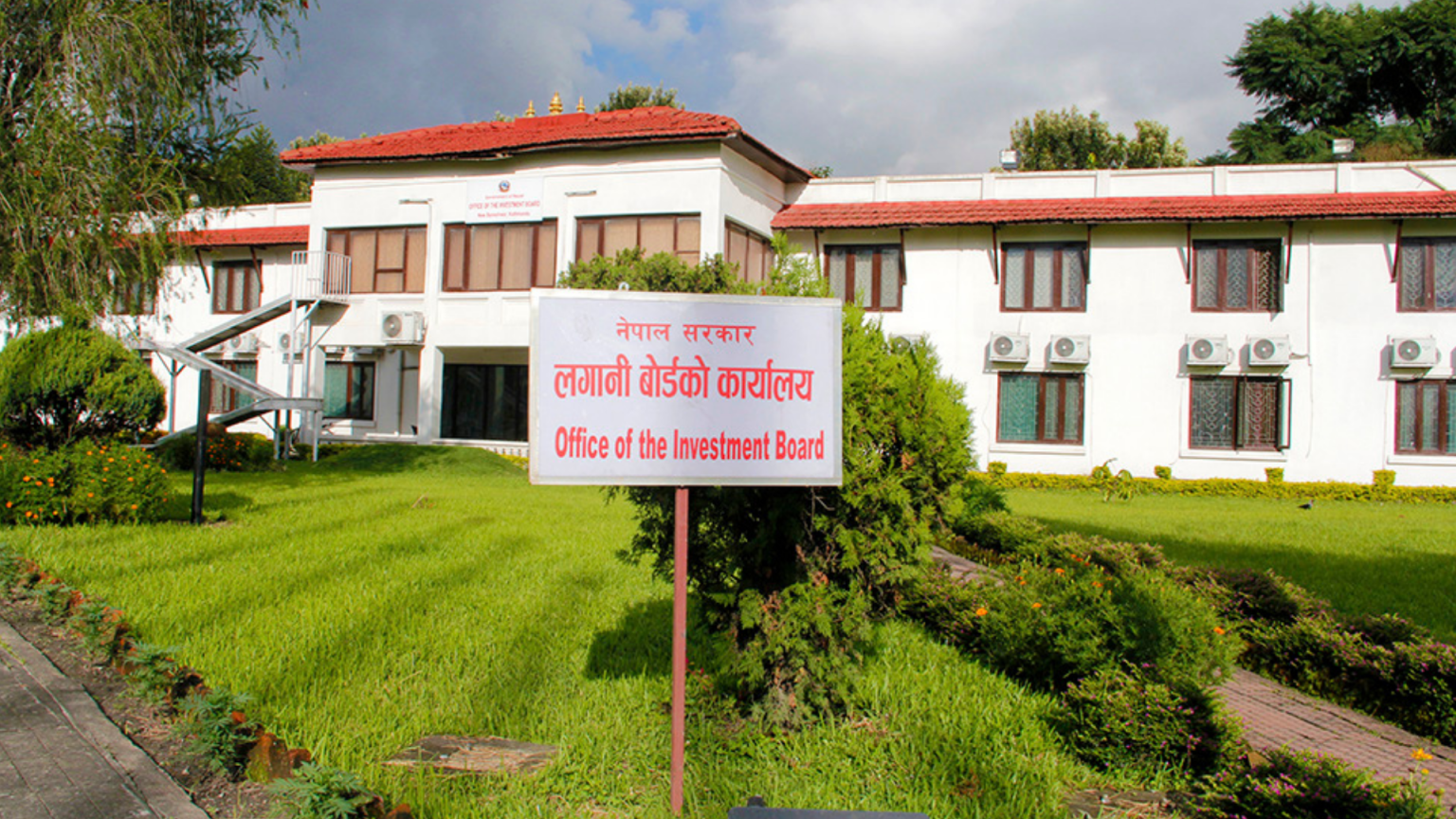
KATHMANDU: Fed up with the excessively slow delivery of big infrastructure projects, then Prime Minister Dr. Baburam Bhattarai came to the conclusion that country needs a dedicated powerful body to promote and facilitate large-scale investment. Then Chief Secretary Lilamani Poudel and former Finance Secretary Rameshwore Khanal supported the idea generated by Bhattarai. Within a very short span of time, Bhattarai’s team drafted a bill that was enacted as the Investment Board Act 2011. Investment Board Nepal (IBN), the apex body for investment promotion in the country, headed by the Prime Minister, was constituted as envisaged by the new Act. The all-powerful body included ministers of relevant ministries, Vice Chairman of the National Planning Commission, Chief Secretary of Nepal government, Governor of Nepal Rastra, Bank, and representatives of the private sector as its members. The IBN, which is also termed a mini-cabinet, enjoys significant power as compared to other government agencies.
However, many people have commented that the IBN, chaired by the Prime Minister himself, failed to deliver despite its capacity to make significant decisions and implement them. Investors complain that there have not been notable changes in investor facilitation and infrastructure delivery even after the institution of the IBN. The Public-Private Partnership and Investment Act (PPPIA), introduced in 2019 made the IBN more powerful further clarifying its jurisdiction.
Lack of coordination affects the project
Due to the lack of effective coordination, mutual support, and facilitation between the government agencies, even the projects that have reached the advanced stage through IBN’s facilitation are facing problems. The Indian company took the license of Arun III and Upper Karnali of 900/900 MW 8 years ago. The SJVN, the developer of Arun III, and GMR, the developer of Upper Karnali, signed Project Development Agreements (PDAs) in 2014. Although the PDAs passed by the Cabinet stipulated that the required land would be provided for both the projects within 21 months, it actually took almost three years. Files regarding The Environmental Impact Assessment (EIA) for the construction of the Muktinath-Birethanti cable car, which is considered to be the longest in the world, have been stuck in the Ministry of Forests and Environment. The Rs 50-billion project is promoted by the private sector. Around 13 years ago, Nep Waste, a joint company of Nepal’s Organic Village and Finland’s Communication Oy, got permission for the solid waste management of Kathmandu Valley through a competition.
Five years ago, an initial PDA was signed between the Office of the Investment Board Nepal (OIBN) and the developer company. However, it has not yet been decided when this project will start because the Kathmandu Metropolitan City (KMC) did not demonstrate a willingness to coordinate with the OIBN at that time. Congruent with the decision of the 49th meeting of the IBN last January, a letter has been sent to the KMC, but no response has been given so far. As reported by the investment board sources, the project could not proceed due to the fact that the KMC had put forward unnecessary conditions including guaranteeing the employment of around 10,000 employees hired by KMC and private companies for solid waste collection.
The above-mentioned are the representative cases that highlight how a powerful body like IBN can be helpless in the process of project development and implementation due to the absence of necessary cooperation from relevant agencies of the government itself. After the establishment of the IBN, investors had expected all the processes will be completed through a one-stop service and the compulsivity to frequent different agencies will end. However, with the passage of time, the IBN appeared to be an additional layer for investors.
“Government agencies are acting as obstacles in the investment process. Their attitude has been discouraging investors. In such a situation, foreign investors hesitate to come to Nepal,”
Files regarding the EIA, land acquisition, company registration, project security, foreign exchange transfer, visas required for foreign workers, construction of access roads, etc., have to be sent to other agencies for approval. IBN itself cannot do anything independently. The performance of IBN for the last 10 years shows it could not function autonomously through the IBN Act bestowed significant authority to it. Subedi, complains that the main problem is the policy and procedural confusion and the tendency of government employees to bargain with investors of the projects which are facilitated by even IBN.
Although huge investment is needed in Nepal, it has not been able to attract desired investment. Experts in this field believe that even if IBN advances the projects under the PPP model, government agencies are not easily internalizing the concept of risk sharing and facilitation. According to Pant, though an institution like IBN is necessary as the commercial face of the government, authorities of IBN are not being properly utilized and investors who come to IBN have still to approach other agencies to get things done.
“The board has sufficient rights through the Act, but it seems that those rights have not been properly used. As the concept of the one-stop-service is not implemented, investors who have come to the board have to carry files to many other agencies,”
Pant emphasized that all procedures should be completed through a single window system at the OIBN, without letting investors feel that IBN is an extra window.
Lack of coordination among line agencies is also an impediment to developing big infrastructure projects in time.
“Since the big projects are connected with the development of the country, it is concluded that the implementation of the big projects will be easy only if everyone moves forward in unity. There should not be the ruling or opposition party for the common goal of development,” Pant adds.
Private sector representatives also hold views in favor of IBN-like agencies to facilitate big investments at a time when the country desperately needs huge investments to achieve desired development goals.
Most countries including America, India, China, Britain, and Korea have given priority to foreign investment. In those countries, there is a competition on how to encourage investors, but there are still many difficulties for investors in Nepal. Kumar Pandey said that if foreign investment is needed in Nepal, the foreign investment gives more concessions than the concessions given by developed countries. They emphasize that there should be a related policy.
“Foreign investment is needed in Nepal, so we should make ourselves more competitive by giving more concessions than other developed countries which are also rushing to attract more foreign investment. There is no concession and discount in Nepal, nor is investment security guaranteed, there is no investment-friendly policy,”
Sushil Bhatta, the Chief Executive Officer of the Board of Investment, however, says that IBN achieved satisfactory results over ten years of its inception. “IBN is making it easier for investors with policy arrangements. Since the IBN is an investment facilitation body, we are facilitating the entire cycle of the projects,” Bhatta says.
IBN still relevant
The 15th Plan aims to invest a total of Rs 92.29 trillion in five years. It is planned to raise 55.6 percent from the private sector, 5.4 percent from the cooperative sector, and the rest from government sources. To achieve the Sustainable Development Goals (SDGs) by 2030, Nepal needs to invest Rs 20.25 trillion annually with the plan to invest about 50 percent from the private sector.
The Confederation of Nepal Industries (CNI) published a report in 2019 that the investment deficit stands at Rs 1.63 trillion, especially for energy, transport, drinking water and sanitation, and urban development. This low amount has been estimated based on the target of a maximum of 18,000 MW of electricity generation. In terms of infrastructure development, Nepal is far behind compared to other countries in the world. In such a situation, there is a need to accelerate the implementation of large projects by bringing in large investments. For this, many people suggest that the IBN should be really made the central authority for PPP implementation as envisaged by the PPPIA.
Former Chief Executive Officer Pant emphasizes that since the IBN is indispensable for the quick delivery of large projects, it should be made powerful not only in law but also in practice by developing it as an effective one-stop service entity.
Birendra Raj Pandey, Vice President of Confederation of Nepalese Industries (CNI) also commented that the 10-year work of the board has been a positive one, saying that it has become a strong mechanism for foreign investors to go to if they want to invest.
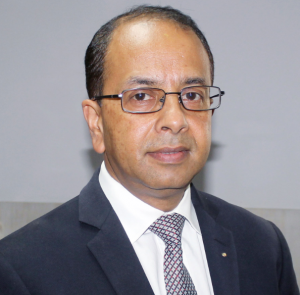
“There was a situation when IBN could have done more to bring in investment, but that did not happen. However, some initiatives were taken by IBN unlike other traditional entities of the government. What we want IBN to do is exercise its authority for the promotion of large-scale projects,”
IBN in the past 10 years
IBN celebrated its tenth-anniversary last year. Despite some weaknesses in project development, implementation and facilitation, there are some impressive works that IBN performed over the period.
IBN successfully organized two Investment Summits in 2017 and 2019 which served as a great forum to sensitize investors about investment opportunities and government initiatives to promote investment.
At the Investment Summit held in 2017, domestic and foreign investors submitted investment intents worth Rs 1.37 while Rs 3.26 trillion worth of investment was intended in 2019. So far, IBN approved Rs 1.4 trillion worth of investment in large-scale projects representing various sectors. Although the Investment Board Act 2011, made the IBN very powerful, the Public Private Partnership (PPP) and Investment Act in 2019 and its regulations in 2020 gave more clarity to the jurisdiction and the promotion of Public Private Partnership (PPP) projects to establish the IBN the Center of Excellence.
In the first act, other projects with an investment of more than Rs 10 billion and hydropower projects of more than 500 MW were under the jurisdiction of the IBN, while the new Act increased the scope and brought other projects with an investment of more than 6 billion rupees and hydropower projects with a capacity of more than 200 MW under its jurisdiction. On the occasion of its 10th Anniversary, the IBN has prepared its Five-year Strategic Plan and Business Plan based on the new Act and commenced implementation last year.
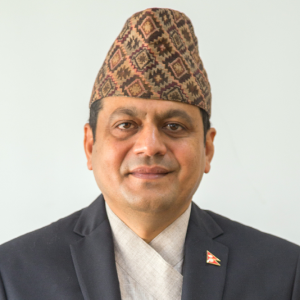
“Within a short period since the establishment of the IBN, we have made the necessary policies, laws, and guidelines to attract investment. We have developed IBN as the nodal agency for the PPP that focuses on promoting large-scale PPP projects,”
A total of 55 projects are listed in the project bank developed by the IBN. As per the five-year strategic plan, IBN needs to bring in USD 10 billion worth of investment, create jobs for 100,000 people through the management of projects worth USD 6 billion, and develop itself as a center of excellence for the PPP.
Though the performance of the IBN is not seen at par with expectation in ten years, the issue of how the IBN implements the five-year strategic plan using the powers given by the new Act will evaluate its significance of it in the future.
project in progress
| Project | stage | Lagani (Rs. Crore) | source country | project site |
| China Nepal Friendship Park | PDA Drafting and Negotiation | 6,490 | China, Nepal | Jhapa |
| Kathmadon Utility Fohor Administration, Package 1 | According to the decision of the Board of 49th meeting of the initial PDA, Kathmandu Mahanagarma Pathaiko | 487.25 | Finland, Nepal | Kathmandu |
| Kathmadon Utility Fohor Administration Package 2 R 3 | Lalitpur Mahanagarlai Transfer Garnuparne | 79.55 | India, Nepal | Bhaktapur, Lalitpur |
| West Seti | NHPCLAI Awardees/Direct Negotiations/MoUs to be Ordered | 15680 | India | Doti, Dudeldhura, Vaitdi, Bajhang |
| Grid Connected Solar Photovoltaic Plus Battery Storage (Dolma) | The cost of a detailed feasibility study should be issued to all | 2160 | Maurice | Mustang, Rasuva |
| Marsyandi besi hydroelectric plan | levy approved | 1177.54 | China | Lamjung |
| Upper Trishuli Three B | levy approved | 822.74 | Nepal | Nuwakot and Rasuva |
| Upper Trishuli-1 | under construction | 7315.62 | Korea, Nepal | Nuwakot and Rasuva |
| eye-opening hydropower plan | levy approved | 630.96 | China | Dhading |
| Myagdi opened a hydroelectric plan | levy approved | 1031.74 | Nepal | insolvency |
| Kaligandki Garj Hydroelectric Project | levy approved | 2806.83 | China | Myagdi, Musta |
| ISUVA opened a hydropower plan | levy approved | 1357.11 | Nepal | assembly |
| Upper Marsyandi 2 Hydropower Scheme | levy approved | 7830.64 | China, Nepal | Mana, Lamju |
| Ghunsa Khola Hydropower Plan | levy approved | 1762.4 | Nepal | Taplejung |
| Himchuli Dordi Hydroelectric Project | levy approved | 1061.91 | Nepal | Lamjung |
| Doodh Khola Hydropower Scheme | levy approved | 1043.6 | Nepal | refuse |
| Upper Tamor Hydropower Plan | levy approved | 6372 | Nepal | Taplejung |
| Lower Mana-Marsyandi Hydroelectric Plan | levy approved | 3341.4 | China | refuse |
| Zoom opened hydropower plan | levy approved | 1053.3 | Nepal | doublet |
| Arun Third Hydropower Scheme | Under construction (physical progress 61 percent) | 8250 6226 (Capital Augmentation Proposal 48th Board Meeting Approved) | India | assembly |
Source: Lagani Board
Commitment to come first
| Country | Amount (Arb Dollar) |
| China | 8.3 |
| Bangladesh | 2.4 |
| Japan | 1 |
| UK | 1 |
| Sri Lanka | 0.5 |
| India | 0.317 |
| through Nepal | 0.115 |
| Jamma | 13.632 |
Source: Lagani Board Nepal
Letter of intent in second investment Summit
| Project name | Price (Rs) |
| Ring Road – Rapid Transit | 16.44 billion |
| Butwal Solid Waste Management | 955 million |
| Tamor Reservoir | 160 billion |
| Janaki Area specific | 2.20 billion |
| Janakpur Solid waste management | 704 million |
| Gandaki Technical University | 6.71 billion |
| Dolkha Film City | 2.75 billion |
| Agricultural Foundation (Banepa and Chitwan) | 487.3 million |
| Taltalaiya Tourism | 4.51 billion |
| Ratnanagar Solid Waste Management | 5050 million |
| Dhulikhel Solidwaste Management | 473 million crore |
| Jeetpur Solidwaste Management | 913 million |
| Ramgram Tilaurakot Bus – Yapid | 1.90 billion |
| Far West Transport | 3.31 billion |
| Hetaunda SmartCity | 3.30 billion |
| Birendranagar Agricultural Foundation | 346.5 million |
| Lumbini Mytranity | 4.29 billion |
| Dhulikhel Medicity | 8.14 billion |
| Sun Kosi-2 | 198 billion |
| Sun Kosi-3 | 110 billion |
| Nalagarh Hydropower | 140 billion |
| SR Six Hydropower | 88 billion |
| Hemza Agricultural Foundation | 619.3 billion |
| Simra SEZ | 4.93 billion |
| Motipur Industrial Area | 8.82 billion |
| Naubasta Industrial Area | 8.53 billion |
| International Convention Center Bhaktapur | 1.76 billion |
| Dhulikhel Dreamland | 4.73 billion |
| West Seti Reservoir | 162 billion |
| Nijgadh Airport | 330 billion |
| East-West Electric Rail | 330 billlion |
| Kathmandu-Pokhara-Lumbini Rail | 369 billion |
| Kathmandu Metro | 330 billion |
| Tilottama Krishi Purvadhar | 725 million |
| Urlabari Agricultural Foundation | 599.5 million |
| Godavari Agricultural Foundation | 345.4 milliion |
| Chemical Fertilizer | 7.15 billion |
| West Seti SR 6 | 250 billion |
| Damauli Tourism | 6.5 billion |
| Rolvaling Adventure School | 4.95 billion |
| Shey Phoksundo Resort | 11 billion |
| Education, Sports, Health City | 11 billion |
| Ski Resort Banana | 11 billion |
| Dhangarhi Airport | 28.38 billion |
| Biratnagar Airport | 40.4 billion |
| SamakhushiTokha Chhahare Road Upgradation | 29.15 billion |
| Kathmandu Outer Ringroad | 2.05 billion |
| Khaptad Integrated Tourism | 20.57 billion |
| Lower Arun Hydroelectric | 1.43 billion |
| Agriculture Poorvadhar Parsagarhi | 671 million |
| Total | 2994.72 billion |
Private sector projects
| Project name | Price |
| Trishuli Galchi | 5.83 billion |
| Mdhyakaligandaki Project | 10.5 billion |
| Iganwa Stream Project | 3.30 billion |
| Upper Chameliya | 7.70 billion |
| Myagdi khola Project | 11 billion |
| Garud cement | 14.10 billion |
| IME Cement | 16.50 billion |
| Jalpadevi Cablecar | 1.76 billion |
| Annapurna Cablecar | 3.41 billion |
| Swargadwari Cablecar | 1.76 billion |
| Resorts Himalaya Resort | 6.16 billion |
| Lower Barunkhola | 27.50 billion |
| Kaligandaki thunder | 29.59 billion |
| Upper Balefi Hydroelectric | 7.97 billion |
| Upper Balefi A Hydroelectric | 6.10 billion |
| Namlan Khola Hydroelectric | 38.10 billion |
| Tarap Stream hydroelectrically | 8.47 billion |
| Bishal Cement | 16.50 billion |
| Bhotekoshi-5 Hydroelectric | 11.55 billion |
| Upper Dudhkhola Hydroelectric | 5.28 billion |
| Kabeli-3 Hydropower | 4.40 billion |
| Upper Lappe Stream hydroelectric | 8.39 billion |
| Hyatt Party Plos | 2.93 billion |
| City of Dream | 6.60 billion |
| Muktinath Darshan Cablebar | 48.51 billion |
| Budhi Gandaki Hydroelectric | 55 billion |
| Total
| 367.58 billion |

No comments:
Post a Comment